

ML642568844
- 年龄
- 未说明
- 性别
- 未说明
观察细节
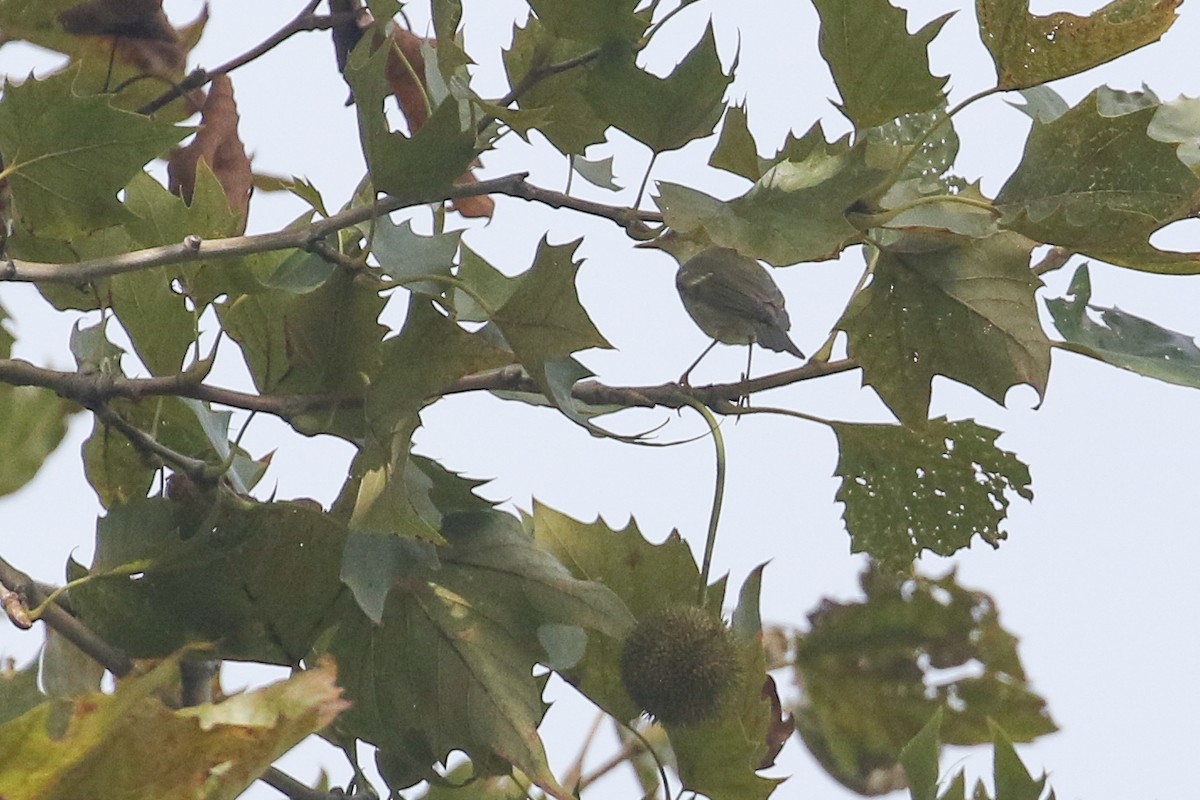
RZ comments: *****mega in the truest sense. First found while working through a warbler concentration in maples by Cottage Garden bathrooms. Initially seen from below, apparent as something very odd, then appeared in the open and in profile for a few jaw-dropping seconds, at which point TH got on it and in which time I was able to shout out the ID over the air-raid sirens in my brain, before vanishing for over 30 mins before being refound by AC in the London Planes just south of the original location. Original first-encounter field notes as follows: Small, rather compact passerine with unmarked olive-brown upperparts and clean whitish underside, with perhaps some very light markings on the sides of the breast. Initial views were only of the back half seen from below, from which the clean white vent, dark and significantly notched tail, and incessant flicking of fairly long wings (in an agitated state) were very evident and most puzzling, presenting vaguely like an oversized kinglet-thing. A low full profile view provided the immediate “penny-drop” moment with two bold whitish wingbars, a stout bill (relative to TEWA at least!) with orange lower mandible, and a bold, highly-contrasting pale supercilium that curved downward behind the auricular. Also contra TEWA, rather than a thin black eyeline, this bird had a thick olivey stripe extending from behind the eye down toward the nape where it joined with the mantle of the same color. Leg/foot color not noted in this initial and highly panicked look, and the bird vanished upon simultaneously trying to get AC/DA on it and trying to get pics – both failied initially. Based on the views and pics gathered in the first couple of views, we surmised that Yellow-browed was the most likely culprit based on perceived likelihood and general supposition that what we'd seen fit for that species, although after the initial find, when asked about likely ID by DG over the phone I'd first blurted out "Arctic-type" before backtracking to probable Yellow-browed. Upon getting better views photos with mob, points contra YBWA piled up - lack of prominent white-tipped tertials and overall more slender/attenuated and smaller-headed structure, plus more olive-brown tones to upperparts rather than colder-toned olive green in YBWA (though this was more noted after the fact in photos). ARWA gained more consideration as the day wore on, with some of the first responders with more recent Phylloscopus experience also positing ARWA-complex as their best fit. I did not personally definitively hear the bird this day, but many did and some recordings of the harsh, buzzy call note (see TH below) supported ARWA over KLWA even as soon as 40 minutes post-find. Unforgettable moment of shock, awe, and panic when that thing appeared. My momentary locking-in was immediately counterbalanced by almost fainting once the bird had vanished without documentation or half the crew getting on it - luckily both were remedied. Unbelievable first state record and apparent first family record for the entire East Coast - there are one record each of YBWA from WI and ON, and one ARWA record from Bermuda (now TWO as of late Oct 2025!), but no ARWA or any Phylloscopid in the L48 east of Nevada. Incredible bird for Randalls and to share with the crew and many twitchers. I never thought I would see a bird of this magnitude here, let alone have it nonchalantly appear in the mix of parulas and redstarts - my birding may have peaked here. My single best find, probably ever - I'll be reliving that moment for many years to come. Insane. TH comments (slightly abridged due to character limit): Absolute mindblower, what a bird. Appeared suddenly with a mixed flock low in the trees by the Cottage Garden at 9:32. Quickly vanished and sent us into a panicked, single-minded scramble to secure documentation of its existence. Additional fleeting sightings at around 10:06 and 10:20 in the canopies of the London Plane trees close by, with the bird foraging like a slow kinglet, making methodical hops and occasional acrobatic sallies. After a long, stressful search by many dozens of observers, the warbler was finally relocated back near the original location at 11:48. It subsequently made its way to the shorter trees at the Urban Farm, providing great looks for the assembled horde at relatively close range and fairly low height. The bird repeatedly gave a strong, low buzzy call as it hopped about and made short repositioning flights. It wasn’t originally clear that these vocalizations were coming from the Phylloscopus, sounding superficially similar to the flight calls of a parulid like Chestnut-sided Warbler, albeit deeper and more forceful, but we did finally match the sound to the bird with confidence. Surprisingly, the bird also gave a few bouts of quiet, whispered subsong while it bounced about in the canopy: a monotone, oscillating trill not unlike that of Wilson’s Warbler. Audio recordings of the distinctive call, with the subsong faintly audible in between, were fortunately locked down. Our later views of the warbler provided superior photos in addition to this audio confirmation, which allowed us to get a better look at the tertials and overall structure of the bird to rule out the original tentative supposition of Yellow-browed Warbler. Feet fairly bright yellowish with similar yellow at the base of the lower mandible. Overall plumage tones rather dusky and dingy, with thin but obvious pale wingbars. The yellow-tinged supercilium was perhaps the bird’s most striking feature, highlighted nicely by the full dark eyeline running from the base of the bill to the nape. Crown dark without any central striping, tertials and secondaries lacked obvious bright white edging, instead showing subtle yellowish fringes. Consultation with those who know the genus better than us East Coasters quickly confirmed our revised field impressions that the bird likely belonged to the Arctic/Kamchatka Leaf/Japanese Leaf Warbler subgroup. In addition to the ever-so-slightly-higher probability of Arctic showing up in eastern North America (though from which direction, one might wonder), audio recordings and live observations of a single, rich, buzzy call note strongly support this identification and counter indicate the potential confusion species. As mentioned above, this individual was preferentially favoring the canopies of London Plane trees for active foraging, but it periodically investigated the smaller, denser ornamental trees around the Cottage Garden and Urban Farm. Despite being quite active and moving dynamically, the bird was surprisingly furtive and difficult to spot when it was moving around the upper branches. Although its initial appearance occurred a mixed flock of agitated birds, it was not obviously associating directly with any other species. There were periods where the warbler was vocalizing consistently, but it also disappeared for long stretches of time without any definitive visual or audio confirmation. Original short-form field notes by TH, composed in the immediate aftermath of the bird’s discovery and initial disappearance, are included untouched below: “Compact Old World warbler flicking wings as it hopped about, tail longer and more obviously notched than superficially similar Tennessee Warbler. Drab olive-brown above and paler below, with a well-defined and striking off-white eyebrow and a full dark eyeline. Prominent, pale wingbars distinctive” Script of the initial find - RZ: “THAT’S A [CENSORED] PHYLLOSCOPUS!!” TH: “THAT’S WHAT I’M LOOKING AT!!” AC: “What does that mean?!” Insanity of the very best kind. An incredible and nearly unprecedented rarity discovered in the company of good friends, and successfully chased by a great many additional friends from further afield. Peak patch birding. DA’s perennially optimistic maxim that “the best Randall’s bird is yet to happen” continues to deliver the goods
技术信息
- 型号
- Canon EOS 7D Mark II
- 镜头
- EF100-400mm f/4.5-5.6L IS II USM
- ISO
- 640
- 焦距
- 400 mm
- 闪光
- Flash did not fire
- 光圈
- f/6.3
- 快门速度
- 1/2500 sec
- 尺寸
- 1423 pixels x 949 pixels
- 原始文件大小
- 963.13 KB