

ML609252213
作者
日期
地点
- 年龄
- 未说明
- 性别
- 未说明
观察细节
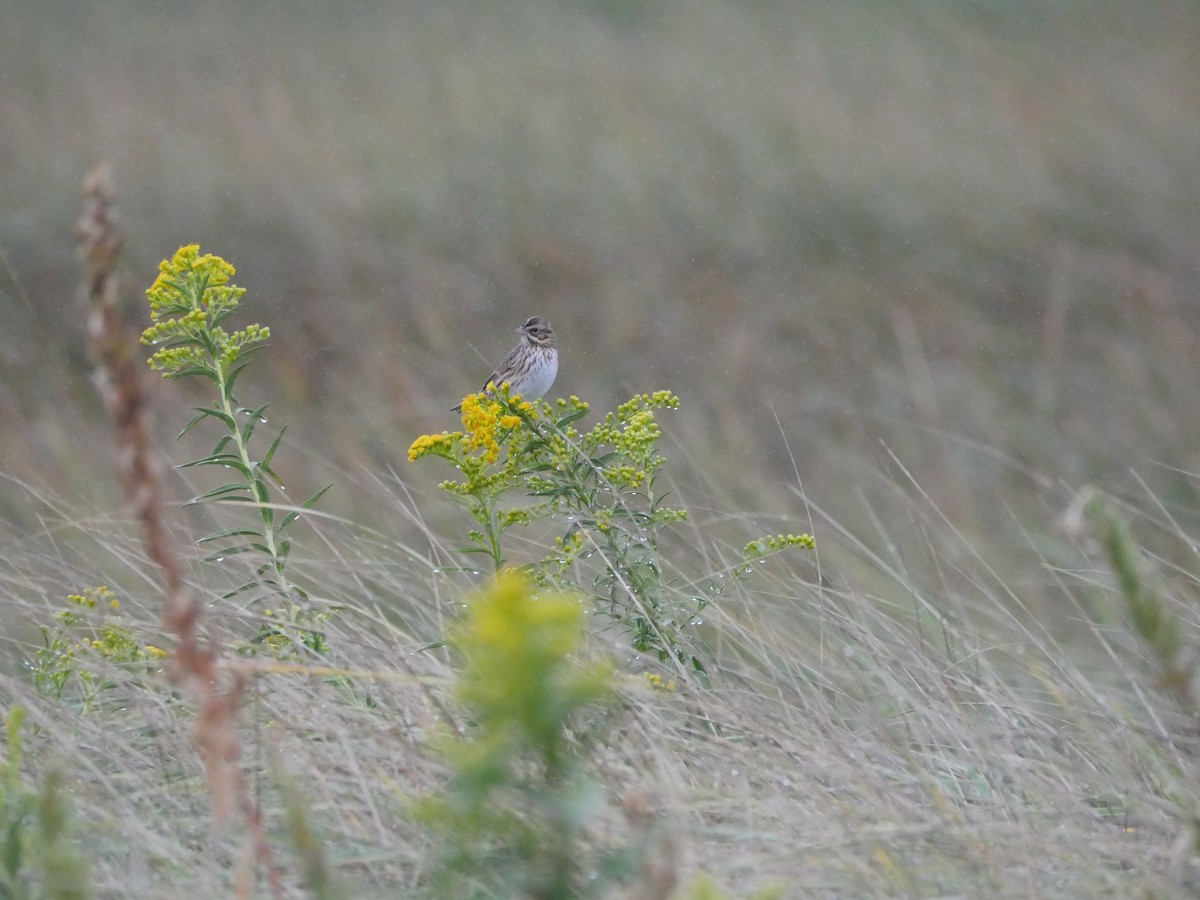
Video clip & photos. Perched in a Seaside Goldenrod in full bloom. Photos and video clips are of an individual SAVS that I initially ID’d as a SAVS in the field, after ruling out Ipswich SAVS. But then when reviewing the media the following day, I was impressed by the overall gray coloring, the strength of the wide, clear malar tract, the subtle but present eye ring, and the total lack of yellow in the supraloral tract. Also, reddish coloring in the wing coverts recalled the ol’ Bay-winged Bunting. As I puzzled over this bird, as captured on video, I uploaded multimedia originally as a VESP, and sent it to some friends for their insights. In the meantime I also came full circle myself on this identification, weighing the size/shape of the bill, (sharply triangular and very pointy at the pointy end) the weakness of the eye ring, and the fact that the rufousy color in the coverts is in the *greater* coverts. After reviewing my own previous photos and videos of Vespers in DE & DC, I am reminded that VESP appears to have larger “doe eyes” than SAVS’s beady little eyes. The bill of an VESP appears more rounded/swollen, especially the upper mandible, giving a subtle impression of an overbite where Upper and lower mandibles come together. Overall VESP body plumage looks more like the blurred nondescript streakiness of a female House Finch. Phenology also points to it being about a month early for peak VESP passage. Additionally I did not find the chip calls to be diagnostic as recorded in this video clip, as both species give similar rather flat, smacking chip calls. I only had the camera’s built-in mic (given all the rain), and I can’t put too much faith in the fidelity of this recording given all the wind buffeting.
技术信息
- 型号
- DMC-GH4
- ISO
- 6400
- 焦距
- 300 mm
- 闪光
- Flash did not fire
- 光圈
- f/8.0
- 快门速度
- 1/1000 sec
- 尺寸
- 4608 pixels x 3456 pixels
- 原始文件大小
- 6.52 MB