

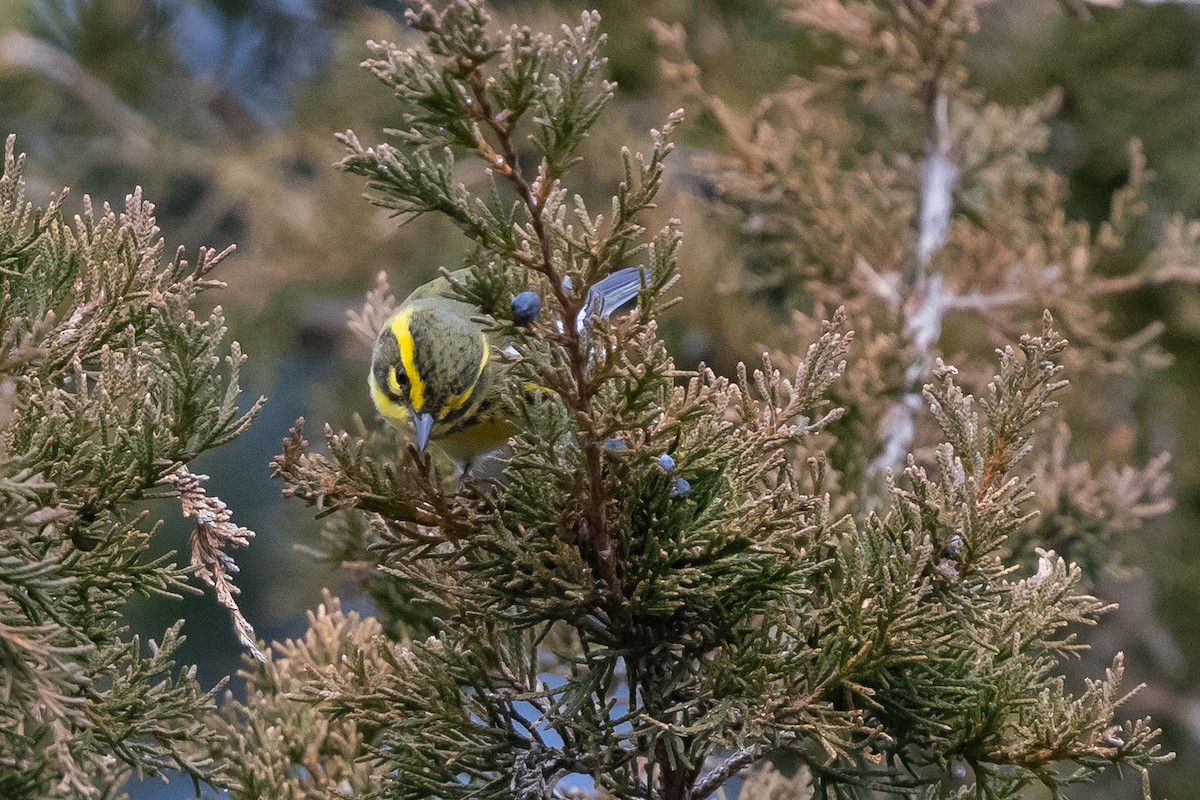
ML646543151
Хувь нэмрээ оруулагч
Огноо
Байршил
- Нас
- Тодорхойлоогүй
- Хүйс
- Тодорхойлоогүй
Ажиглалтын дэлгэрэнгүй
***MEGA; 3rd state record for Connecticut. An annual western vagrant to the coastal Northeast, but with an inexplicable absence from the Constitution State. Typically more than one record per year in Massachusetts and the NYC/LI region, creating a ridiculous disparity of ~35 records for MA and 23 for NYC/LI in comparison to a measly three for CT. Both prior CT records are from 2020, with one in Hartford from Apr. 17–20 found by Paul DesJardins and the other at Fort Nathan Hale found by John Oshlick, making today’s bird the second New Haven Co. record. Lastly, this bird represents Hammonasset’s 328th species on eBird, adding to the annals of CT’s most famous and diverse hotspot with the first new species here since the Townsend’s Solitaire of Nov. 2022! Being one of the classic NE vagrants, TOWA is always in consideration every fall and winter as the search for rarities invariably becomes the post-migration focus. Indeed, during Thanksgiving last year while visiting family in Mass., I stumbled upon my first self-found New England TOWA (https://ebird.org/checklist/S204006461 ). Little did I know the encore to that find would happen so soon — and this time much closer to home! Today represented the final walk of the season for the Yale Birding Student Association, and after a semester of birding within short drives of New Haven Harbor, we decided to make the journey to Hammonasset to kick off finals week. Arriving before the park gates opened amidst a wet wintry mix that somehow was devoid of real snow despite the sub-32°F weather, we slowly meandered along the entrance road, ducking under trees to avoid the sleet as we headed toward Meig’s Point. We stopped along the median by the I-95 sign to dry optics when we first noticed a flyover YRWA that I pointed out. Owen quickly spotted three more in a tree along the median to our north and quickly followed up by calling out a male PUFI. Hoping to see the PUFI, I scanned in the same direction but looked lower and instead fell upon this warbler moving through the top of a scraggly juniper there (41.268844, -72.556304). My heart stopped. Catching just a glimpse of the bird in profile, the green back, dark streaks down the flanks, light yellow chest, and short but broad, striking white wingbars screamed TOWA. And so, naturally, I screamed “TOWNSEND’S WARBLER!” as I began sprinting in the direction of the tree. Zak and Owen had glimpsed the bird as well, but we all wanted better views before we got ahead of ourselves on a bird of this magnitude. Among a mixed flock of PUFI, YRWA, CEDW, and AMRO, the TOWA inched out along the top of the small juniper, now offering good views of all the pivotal ID features: lemon-yellow supercilium, the brightest yellow anywhere on the body of this bird; fainter yellow malar and sub-orbital crescent; dark green auricular patch and edge of crown both extensively flecked with black; center of the crown more olive green with less black, though darker and contrasting with the nape/back; olive green nape melding into a yellow-olive back with chevron-streaking that rules out hybrid TOWA × BTNW; dark wing panels with bold white wingbars; yellow throat and upper chest; white lower chest and underparts; broad black streaking running down the flanks from the upper chest; and lastly, restricted black plumage around the base of the throat, likely denoting this as an immature male. Photos secured and now in an utter tizzy of post-rarity elation, we got word out on the CT RBA. If one looks at most fall/winter TOWA records, these birds tend to be pretty sticky, even without the presence of a feeder. In looking away to send out this message, there wasn’t a doubt in my mind that this bird would put on a show in the vicinity of the Hammo entrance for the next few hours, if not days or weeks. Well, when we looked up from the message, the bird was gone. We searched hard for the next ten minutes while the mixed flock stuck in the area, and none of us could relocate our western warbler. At one point, I spotted a suspicious warbler as it jetted off from the pines to the west (in the same direction as all other birds in this mixed flock). None of us could say if this was the TOWA with certainty, but it didn’t matter all that much. Clearly the bird was travelling with the aforementioned mixed flock: given all other birds moved west, finding the mixed flock somewhere to the west would be the key. Over the next five hours, the Yale Birding crew, along with upwards of 50 CT birders freshly arrived in hopes of seeing the TOWA, scoured Hammonasset. Just one sighting, by Zak, in the West End Cedar Line followed the original sighting, yet by the time people arrived, the bird had again disappeared. Myself, Owen, Justin, Jaden, and Polly picked through every bird in the junipers/evergreens to the north and south of Swan Pond and Chase Channel, and while the search yielded a haul of other December notables, the TOWA could not be relocated. All in all, this was the avian highlight of the fall semester, and while it’s a shame more people didn’t get to enjoy it, the chance to do this with the whole club was pretty amazing. It’s not every day that you get to find 3rd state records with some of your closest friends during a short break from the hubbub of finals season. As the old saying goes, bird every bird. 🙂 Plenty of photos to come, though I deeply wish they were better.
Техникийн мэдээлэл
- Загвар
- Canon EOS R5
- Дуран
- RF100-500mm F4.5-7.1 L IS USM
- ISO
- 4000
- Дурангын урт
- 500 mm
- Гэрэл цацруулагч
- Flash did not fire
- Өрцний тоо
- f/7.1
- Өрцний хурд
- 1/1000 sec
- Хэмжээсүүд
- 1634 pixels x 1089 pixels
- Анхны файлын хэмжээ
- 1.29 MB