

ML645099104
Collaboratore
Data
Località
- Età
- Non specificato
- Sesso
- Non specificato
Dettagli dell'osservazione
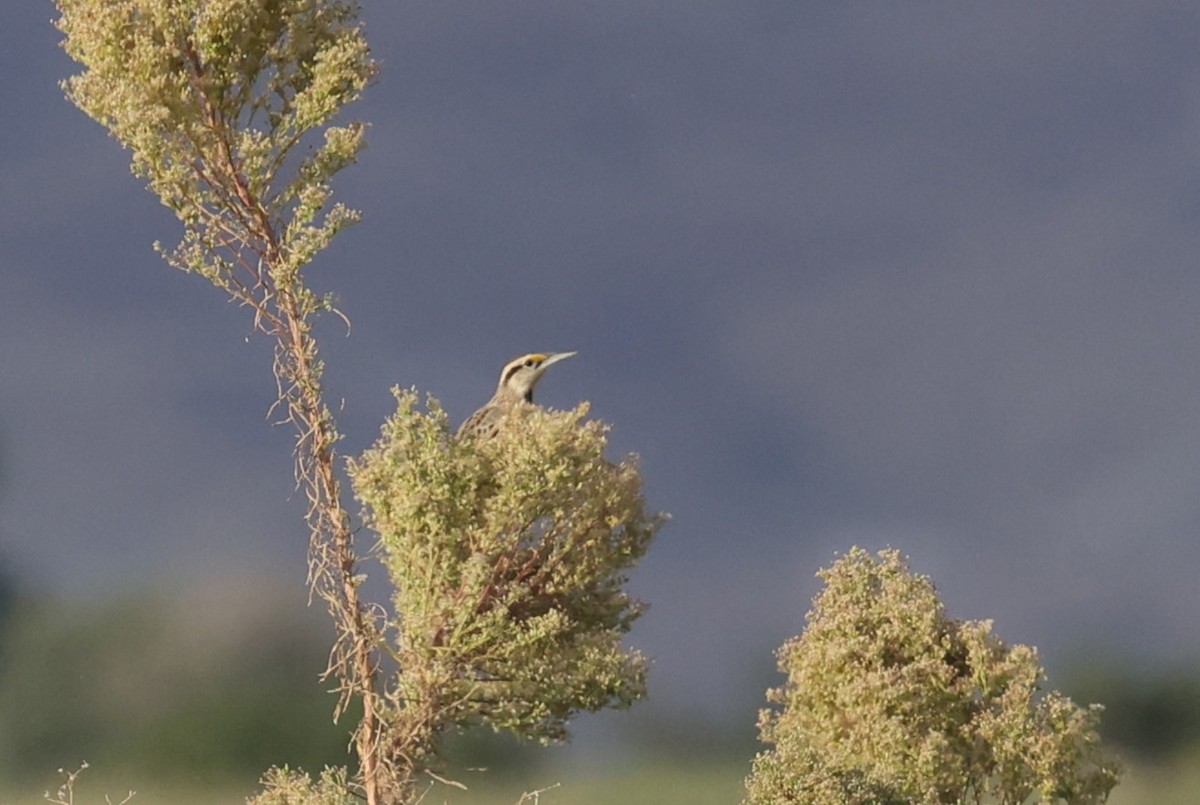
See checklist comments about access. The bird teed up here 32.763482,-114.535778 and ventured into bermuda grass (north of pin) and another weedy/grassy field (south of the pin). The backstory actually starts in early January when Lucas Stephenson, Dessi Sieburth, and I (Adrian) spent four days birding the LCRV. On the second day we birded the Yuma area, and found some nice bermuda grass fields on the CA side of the river that looked good for meadowlarks. We decided to grind them in the evening for CHME since we were aware of fairly close-by sightings in Az. Shockingly, after only an hour or so, we found and photographed one in some thick bermuda grass with nearly 100 Westerns!! We spent the dwindling daylight staking it out in the hopes of getting audio - but it was mostly silent. After sunset, we packed up our cameras and hopped in the car towards Yuma to fill up on gas and burritos. While en route, we loaded the ebird list and were perplexed to see that it was putting the location as Arizona?? Startled, we looked into it a bit and realized that our location was part of a mere 7 miles of the entire Az / Ca border along which Az takes up a sliver of the *west* side of the Colorado River - due to an old route of the river that's now a relict river bed west of the current channel. Distraught, we returned the next morning - maps in hand - and found no trace of meadowlark habitat on the true CA side of the border. It was all cabbage, overgrown weedy fields, and some uninviting alfalfa plots. Dismayed, we pushed north to the Blythe area where we scoured plenty of excellent meadowlark habitat but found only WEMEs. Unsatisfied with the outcome of our CHME mission, I subsequently spent four days (one each in Jan, Mar, Oct, Nov) searching around Blythe but again came up empty. Finally, this afternoon, Chris and I decided to give Bard/Yuma another try after at the tail end of a desert + LCRV loop. We were pleased to find little habitat on the Az side (just one field where the CHME was in Jan), and huge fields of grass a mere 1/2 mile north in CA! Today's meadowlark flushed up a couple times by itself after ~30 minutes of searching, very near ~10 Westerns. It showed a lot of white in tail, with the three outermost retrices (r4 - r6) almost all white, while r3 was mostly white as well. It eventually teed up (see video) and gave the flight calls (see audio) and finally a buzzy "zeep" call characteristic of CHME, took off flying over the field, and dropped into the grass. The bird then flushed again, and this time I obtained the attached flight photos showing the details of the spread tail. It zeeped again when flying past, but didn't vocalize later in the evening after that. We kept track of it for about 5-10 more minutes before it moved deeper into the bermuda grass (north of the pin) and couldn't be relocated. Chris likely has a recording of the zeep call - will add a written description and of the call and whatever recordings turned out, in a few days. Extent of white in tail (especially in r3), zeep and flight calls, and to a smaller extent the face pattern point to CHME over WEME, while overall coloration, flight call (need to research EAME variation), and apparently barred r1 & r2 w/o black bar down the center point to CHME over EAME.
Informazioni tecniche
- Modello
- Canon EOS R5
- ISO
- 1250
- Lunghezza focale
- 500 mm
- Flash
- Flash did not fire
- f-stop
- f/8.0
- Velocità otturaore
- 1/1600 sec
- Dimensioni
- 1317 pixels x 883 pixels
- Dimensione originale file
- 181.1 KB