

ML646970901
Přispěvatel
Datum
Lokalita
- Věk
- Nespecifikováno
- Pohlaví
- Nespecifikováno
Podrobnosti k pozorování
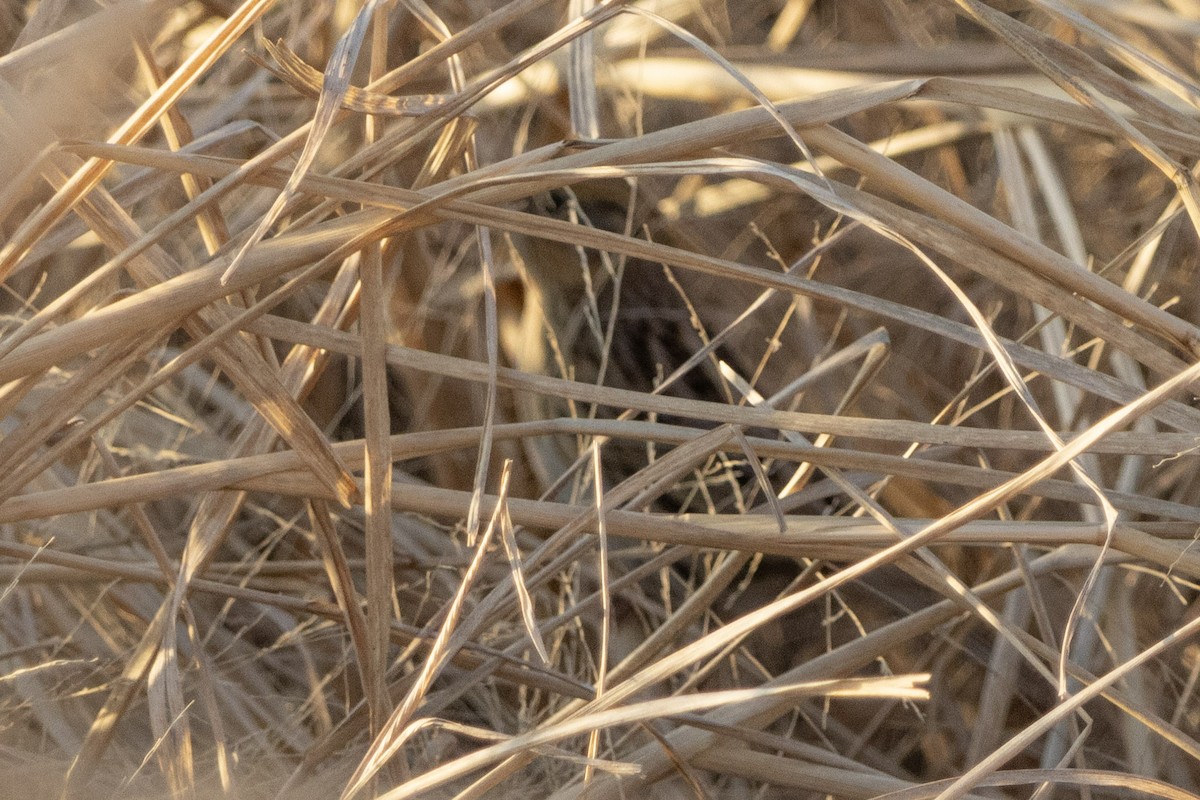
Sound ID and pics *** Adding in more detail now that we're not up against the CBC submission deadline *** Since team 1 had potentially the strongest chance out of all the teams to find a LCSP due to habitat for the CBC, we were determined to find at least 1. All day we were playing flight and alarm calls for this species whenever the habitat looked good. Since the prairie is so dry this year, we had A LOT of good habitat. Every 30 seconds of so Tim would play calls of this species, and we'd wait for a vocal response or a bird to perch and investigate. This equated to playing hundreds of calls throughout the afternoon. My intent here is to say we were intimately familiar with their calls and would be able to pick it out instantly when heard. The habitat we found these birds in was pretty good for them. Due to low water levels on the prairie, there was tons of long, dry grass, with decent opportunities to perch/hide in a bush if needed. The entire ground was covered with matted grass, which gave the sparrows great opportunites to scamper around through little "tunnels" undetected. The soil itelf was bone dry, however, we were 50-100 yards away from the stream that leads directly into alachua sink - too dry for optimal henslowe's habitat and wetter than what I'd expect for grasshopper. The first bird we encountered did not actually respond to playback, but rather gave a quick chip as Tim nearly stepped on it. We were so close to the bird we were very precisely able to locate it without seeing it. We then surrounded the taller area of dried grass that it was in to try to sneak a look at the bird. A couple minutes went by with no bird, it then responder to playback 10-15 feet away from where we first heard it. The bird has walked under the dried grass undetected. Classic Leconte's behavior. We essentially followed this pattern for 10-15 minutes with this bird. It would make a call, we go nearer for a better look, only to reappear somewhere else. Eventually we decided that we had put the bird through enough after we traveled 50-75 yards from where we initially found it. We went back to where we found it to grab our gear, and we heard two more calls simultaneously from two different direction to get to our 2nd and 3rd birds. The pictures that I (Will) have posted are pretty terrible - the bird never perched for more than a second. Tim has some pretty good video though. The pictured bird has an orange supercilium and mustache, as well as gray lores (henslowe's has a more yellowish lore). It has a mostly complete white eye ring. Also to note on the appearance is this bird was much more warm/rich colored that all the nearby hundreds of savannahs
Technické informace
- Model
- Canon EOS R7
- Objektiv
- RF100-400mm F5.6-8 IS USM
- ISO
- 800
- Ohnisková vzdálenost
- 300 mm
- Blesk
- Flash did not fire
- Clonové číslo
- f/8.0
- Expoziční čas
- 1/640 sec
- Rozměry
- 2072 pixels x 1381 pixels
- Původní velikost souboru
- 783.42 KB