

ML644955060
Contributor
Date
Location
- Age
- Not specified
- Sex
- Not specified
Observation details
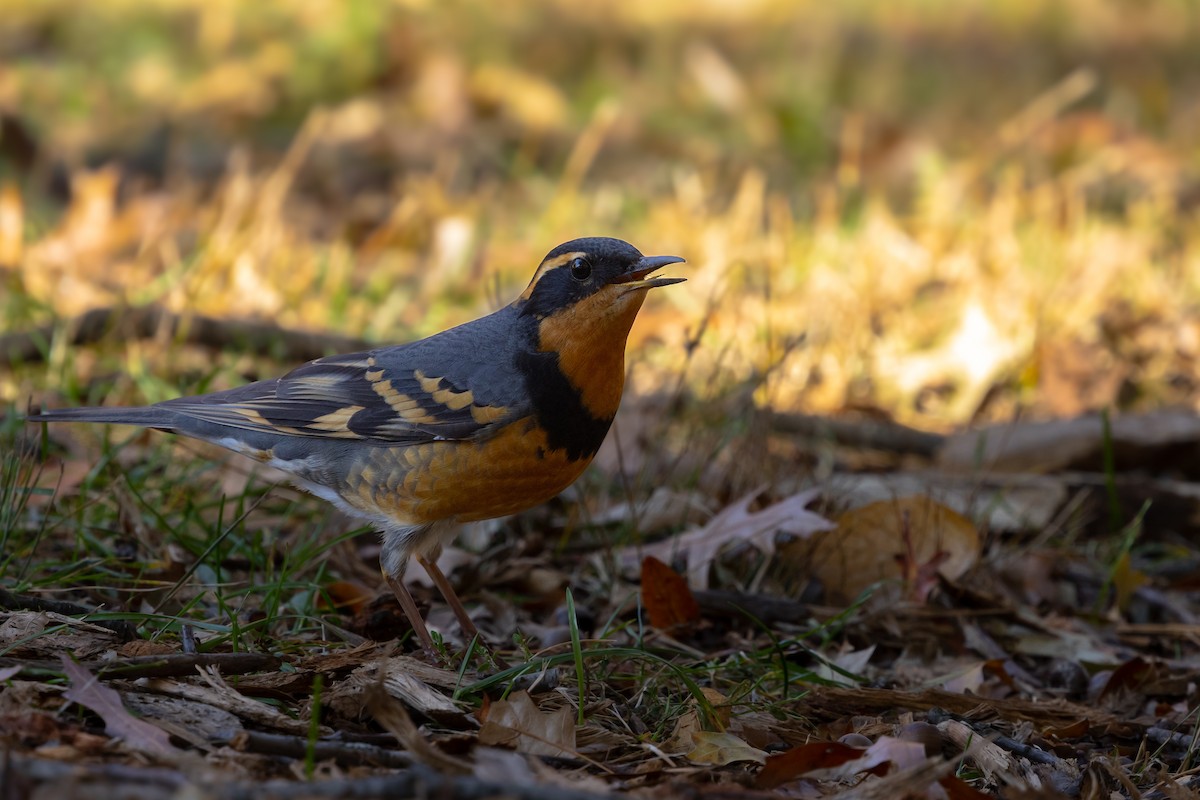
*Very rare, though an expected vagrant in late fall through early spring; approximately ~50 state records based on a cursory check of eBird, of which 15 have been from Long Island/NYC. Remarkably the 3rd record for Prospect Park, all of which have now constituted long-staying birds: Mar. 7-Apr. 5, 2013, Dec. 29, 2019-Apr. 2, 2020, and now this bird, which was discovered by Asher Fusco on his way to vote on Oct 27! These records, and many others which often come from personal feeders, show that VATH is typically a species that sets up shop based on reliable food sources and tends to stay in those areas until food disappears or migratory urges kick in, making them a particularly chaseable rarity. After catching wind of this bird when it was found, I had been mulling over the long trip to Prospect from New Haven in order to see it. I almost never chase NYC rarities even when I’m home, but it’s hard to pass up a confiding male VATH in the snazziest of plumages. Once our Yale Birding walk was cancelled this morning due to rain, Owen and I hoped on the train and began the three train journey to Prospect. Upon arriving on site, with a hoard of birders already present, we realized this bird was not going to be as easy as expected. We knew it was around, but with close to 40 eyes, no one could spot this bird for 20 minutes. Apparently it had been flushed into the vegetation on the backside of Litchfield Villa and had yet to show itself since. After 20 minutes, I got on the bird for maybe three seconds as it briefly perched up in a bare tree, before immediately ducking back into the vegetation. I tried to alert others before going for photos, and that meant for the next 30 minutes, I was the only one present who had seen it while it hid in plain sight. Owen and I both remarked at its ability to remain perfectly still without moving for up to half an hour, since that’s what it had to be doing for no one to catch even glimpses of movement. After a tense 30 minutes, Owen then refound it as it made its way out of the thickets and onto a branch well above our heads. It flew from there to one of the main oaks, where it waited for a few more minutes before flying right at us and landing in the branches directly above our heads. From here, it waited again before flying down to the ground to forage for acorns; it came back above our heads and then down to the ground once more, before flying into the Litchfield Villa vegetation once more. Views when it landed so close to us were crippling. Totally unmistakable robust thrush with Halloween-themed plumage. Bright orange throat and stomach separated by a broad, black chest band. White underside around feet. Pale yellow-orange post-ocular supercillium contrasting with black face and gray-and-black vermiculated crown. Thick black beak with yellow basal end to lower mandible. Slaty gray mantle and upper tail. Highly pattern wings with double wingbar and primary shafting concolorous with supercillium. My two favorite features, on top of the vermiculated crown, are the gray-fringed flank feathers and ornamented gray-white-orange undertail coverts. I’m not sure where VATH would find acorns in their native range, but its choice to subside on these nuts does seem a little bizarre. None of our local thrushes often eat acorns that I know of. Once the second sighting had concluded, everyone else left, but Owen, myself, and one more man stayed. The VATH came back out quickly this time and landed in an oak where it sat still as a rock for the next 20-30 minutes, both highlighting how this bird can go so easily undetected and allowing us a long, thoughtful study of this individual. We were able to point out the bird to the returning Columbia Bird Club and other birders/passersby, ensuring that we didn’t leave the bird with no one in attendance. Truly a phenomenal bird to see in NYS and a breathtaking individual at that. Many photos to come
Technical information
- Model
- Canon EOS R5
- Lens
- RF100-500mm F4.5-7.1 L IS USM
- ISO
- 800
- Focal length
- 500 mm
- Flash
- Flash did not fire
- f-stop
- f/7.1
- Shutter speed
- 1/320 sec
- Dimensions
- 4178 pixels x 2785 pixels
- Original file size
- 2.37 MB